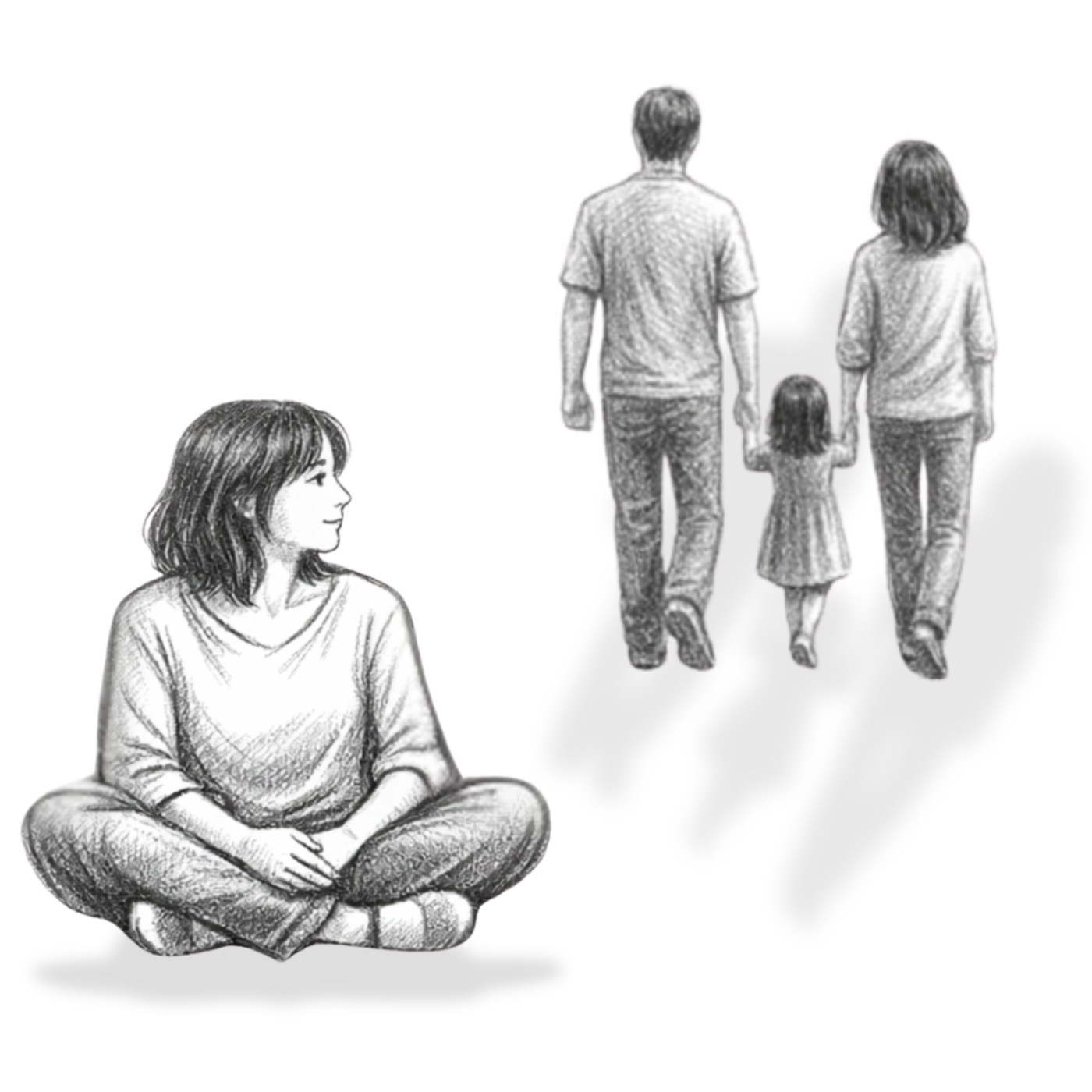
I’ve spent my whole life in the quiet space between two languages and two cultures. For a long time, I didn’t have a name for that in-between place – I just knew it shaped how I listened, how I understood people, and how I understood myself.
I am a CODA – a Child of Deaf Adults – though my own childhood sat in a slightly different place within that world, shaped by a Deaf father and a hearing mother, what some would call a CODH.
CODH Fragments is my way of gathering those pieces. Not as an expert, not as a representative of anyone else, but simply as someone who grew up moving between Deaf and Hearing worlds with a foot in each and a home in both.
I am writing here because there are stories that don’t fit neatly into either world. Stories about language, identity, belonging, and the quiet moments that shaped me long before I knew they were shaping anything at all. This space isn’t meant to be an official resource or a debate stage. It is a journal – a place to lay down the fragments of a life lived in two languages and two cultures, and to explore what they mean now.
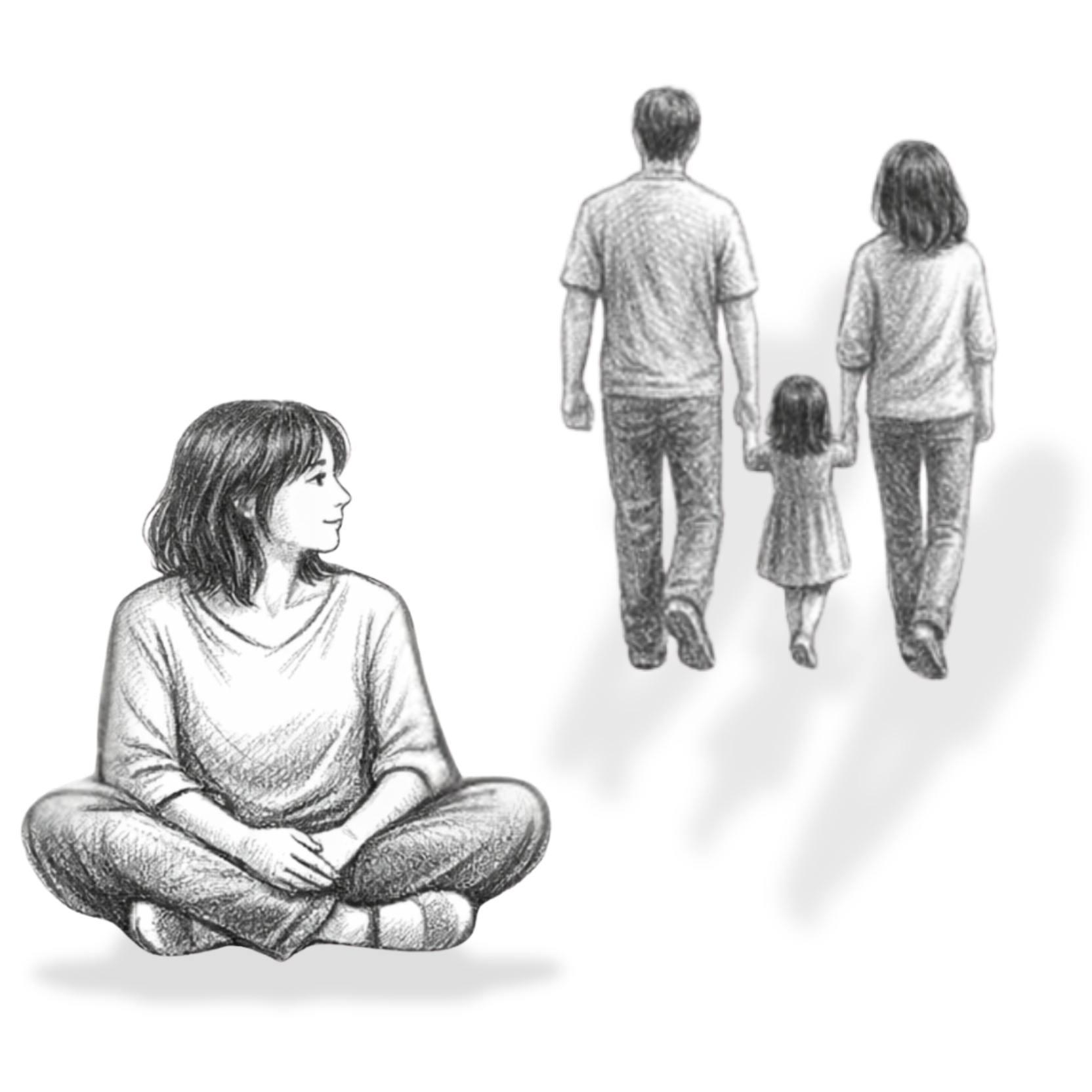
The first fragment of this story begins in our backyard.
We were in the backyard of what I now call the ‘old’ house, though it was simply home then. My mother sat in a lawn chair watching my sister and me play. It was the kind of summer moment that leaves only impressions, not details. I must have been impatient about something – I often was at that age, a talkative child who expected the world to respond as quickly as I spoke.
My mother has always said that even before I understood anything about Deafness, I somehow knew I had to communicate differently with my dad. I pointed, I gestured, I showed him what I meant long before I had the words or signs for it.
I don’t remember the exact reason my mother chose that particular day to explain my father’s ears to me. I was only four or maybe five, and she was doing what parents do – trying to help me in the best way she knew how. Maybe she saw something in me that needed guidance. What I do remember is the feeling that something important was being said, even if I couldn’t grasp it yet.
I was beginning to sense that my father and mother spoke in different ways, living in different worlds of communication that I would learn to move between.
Those early years were full of small moments that I didn’t realize were shaping me.
One of the clearest came in first grade.
My teacher, Mrs. Redman, knew my father was Deaf, and one day she sent a note home – pinned to my dress, the way things were done before book bags – asking if I might teach the class a couple of signs during snack time each day.
I remember the thrill of it!
Every evening at dinner, my dad would show me two signs, and we would practice them together until he was sure I had them right. It became our little ritual, a quiet collaboration between us.
I can still remember the first two signs he taught me: banana and dance. Completely unrelated, but perfect in their own way. I was so proud to show my classmates! It made me feel special, not different in the way children fear, but different in a way that felt like a gift.
My father taught me to fingerspell as I learned the alphabet in school. While my classmates were sounding out D-O-G and H-A-T on paper, I was learning to spell those same words with my hands.
I didn’t realize it then, but I was growing two literacies at once – one spoken, one signed – each shaping how I understood the world.
It took me years to understand that our home wasn’t truly a signing home.
That realization would come much later.
Yes, my father signed – he taught me the alphabet, and the first shapes of language on the hands. My mother never learned ASL, and yet calling what she did “only fingerspelling” would be like calling Mt. Everest only a hill.
Her words didn’t come letter by letter.
Like musical notes, they flowed.
The movement, the cadence, the rhythm, the clarity – the fingerspelled words became their own kind of sign in the way they lived on her hands.
I didn’t realize it at the time, but as I’ve been reflecting on these memories, I’ve come to understand how much my own style of fingerspelling grew from watching her.
My father taught us the letters.
My mother taught me how they lived.
Somewhere along the way, that rhythm found its way into my own hands.
Years later, when people would rely on me for clear fingerspelling as an interpreter, I realized the roots of that skill had been there all along – in the quiet example she set.
I learned the letters from my father, but I learned the language of fingerspelling from my mother. Long before I understood it, her rhythm had already become part of mine.
Perhaps that’s why my family never felt like something I needed to defend.
And maybe that’s why the Deaf and Hearing worlds never felt like opposing sides to me. They were simply two places where I belonged.
From the very beginning, being different didn’t feel like something to hide–it felt like something to share.
Teaching my classmates signs each day made me feel connected rather than separate. It was as if both worlds were offering me something extra to hold onto—something I could truly belong to.
Those days at school and evenings at the dinner table were small moments, but they shaped me.
They taught me that language could bring us together.
They taught me that my father’s hands held stories just as real as the ones spoken aloud.
And they taught me that identity isn’t something you declare – it’s something that grows quietly inside you, sign by sign, word by word.
These early memories—my mother explaining my father’s ears, learning signs at the dinner table, teaching my first-grade classmates to sign one snack time at a time—are small fragments.
But they form the foundation of everything that followed.
They mark the beginning of how I learned to navigate between two languages and two cultures without ever feeling torn in half.
Looking back now, I sometimes wonder how things might have unfolded if sign language had been part of our home earlier.
That kind of wondering comes with adulthood. With hindsight.
As I grew older, I began to understand more of the complexities, the tensions, the misunderstandings, and the beauty that exist within the Deaf and Hearing worlds.
I also find myself wondering how other CODAs might think of my story.
Will parts of it feel familiar?
Or entirely different?
Every CODA grows up in their own unique space between two worlds. Each story unfolds differently–but there are threads of understanding that seem to connect us.
But before any of that, there was this:
A childhood shaped by hands and voices.
By gestures, signs and words.
And by a sense of belonging that felt simple and whole.
This space–CODH Fragments–is where I’ll continue gathering these pieces.
Some will be gentle memories like this one.
Others will be harder truths.
Questions I’m still holding,
Reflections on the Deaf world today.
But all of it will come from the same place:
A life shaped by two languages, two cultures, and the quiet in-between where my identity first took root.
I didn’t have a name for that in-between place then.
I’m not sure I fully do now.
I just know it’s where I learned to belong.
— Gathering the fragments, one memory at a time…
 The First Train Ride
Leave a comment