In my first fragment, I wrote that it took me years to understand that our home wasn’t truly a signing home.
It took me even longer to understand the love behind it.
At the time I didn’t understand why.
This is the why.
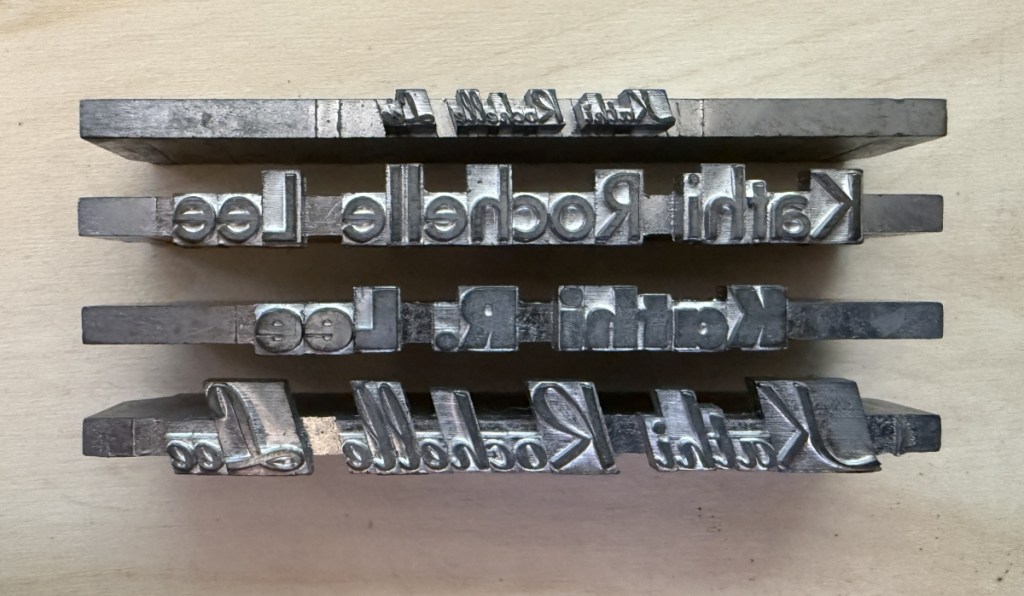
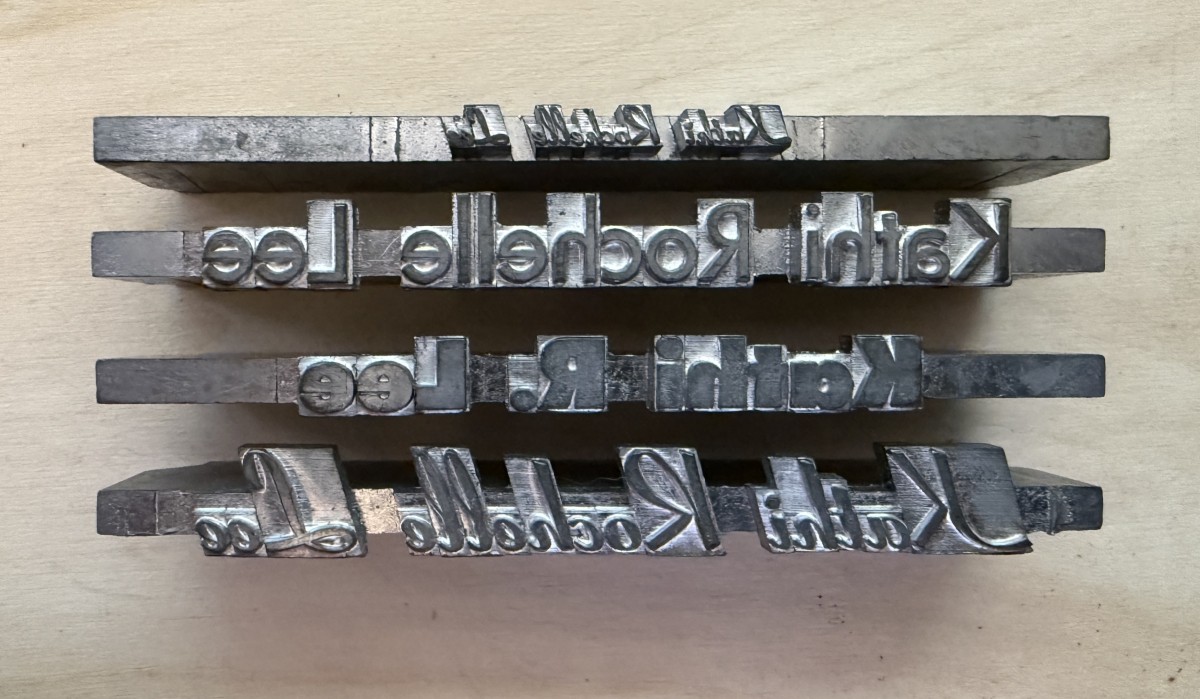
My father worked at the Detroit Free Press as a printer/typesetter, back when newspapers were built by hand and skill, long before computers changed everything.
Many of his coworkers were Deaf.
At work, he signed freely.
That was his world.
When he came home, his language shifted.
It changed shape.
At home, things were different.
My mother didn’t know ASL. What they built together was something else.
Much of their communication came through fingerspelling.
She carried words on her hands with a rhythm all her own–not letter by letter, but in a flow that felt almost musical.
It was the language of our household.
The bridge between two worlds.
And the one place where my father stepped back from the fullness of his own language.
For a long time, I didn’t question it.
Children rarely do.
But as I grew older, I began to wonder why our home didn’t look like the Deaf homes I would later come to understand.
The answer came slowly.
In pieces.
The way truths often unfold.
My father was proud of us–proud of our good grades, proud of how easily we moved through school.
Years later, he told me that many of his Deaf coworkers worried about their children falling behind.
He had heard stories of children struggling with English, struggling in class, struggling to keep up.
And somewhere along the way, he connected those struggles with signing.
He believed–because that was the belief of his generation–that too much sign might hold us back.
He thought he was protecting us.
Years later, when I asked him to teach me more sign, he hesitated.
Not because he didn’t want to share it–
But because he didn’t know how to teach it.
He knew the language.
But not how to break it apart.
Not how to turn it into something he could teach us.
By then, we were already grown–but he was still holding onto what he had always believed.
He didn’t want to risk doing the wrong thing.
He was still trying to protect us.
So he stayed with what felt safe.
He stayed with what my mother knew.
He stayed with the version of communication that seemed to keep us moving forward.
It wasn’t until I was an adult–with four children of my own–that I finally stepped into a classroom to learn sign formally.
I enrolled in a local university program, nervous and excited in a way I hadn’t felt in years.
The director of the department was a CODA.
I remember being fascinated by his story of growing up with two Deaf parents.
He was the first person I had ever met, outside of my own family, who had grown up with a Deaf parent.
Let alone two.
And he, in turn, was fascinated by mine–
a Deaf father, a hearing mother,
and a home shaped by fingerspelling instead of full sign.
‘CODA’
It was the first time I realized there were others who had grown up in that same in-between place.
My father was so proud when I told him I was taking sign language classes.
He said he was glad a “real teacher” would be teaching me.
I didn’t tell him that he had been my first teacher all along–
that the alphabet he placed in my hands,
the patience he showed at the dinner table,
and the quiet ways he moved between worlds
had shaped me long before I ever sat in a classroom.
Once I began to recognize it, I thought that if our home wasn’t a signing home,
then something must have been missing.
Now I understand it differently.
That understanding didn’t come all at once.
It came slowly–
as I began to see my father not just as my dad,
but as a man doing the best he could with what he knew.
I learned it wasn’t the absence of language.
It was the presence of choices–
shaped by love,
by fear,
and by the world my father was navigating at the time.
It wasn’t a signing home.
But it was a loving one.
It was a place where two people from two languages tried their best to meet in the middle–
and where their children learned to live in that middle with ease.
Our house didn’t lack a language.
It held many–
spoken,
signed,
fingerspelled,
implied–
all woven together in the only way my parents knew how.
And it was more than enough.
It was full.
–Gathering the fragments, one memory at a time...
 The First Train Ride
Leave a comment